Showing posts with label scammer. Show all posts

Florida Man Almost Falls for Fake Microsoft Scam and Warns Others to Not Fall Victim

A North Fort Myers Florida man almost fell victim to a fake Microsoft scam, and shares his experience with WINK News. Find out the alarming scare tactics that scammers are using to scare innocent victims into handing over their money.


Florida man Steve Seifert
Steve Seifert; credit: WINK News

WINK News reporter Ryan Kruger reported that Florida residents lost about 1.5 billion dollars to online scams in 2025, according to the FBI. Cyber crooks are using fake and malicious websites and pop-ups to fool victims into thinking they have committed a crime before asking for money.

Ryan Kruger reported that 3,000 people fell victim to scams every day in the U.S. in 2025, with Florida having the 3rd highest losses after (#2) Texas and (#1) California.

A Florida Man Receives a Pop-up Warning on his Computer

Local Fort Myers resident Steve Seifert told WINK News that he was online when he suddenly received a pop-up on his computer, with a warning that got his attention.

The fake Microsoft warning read:

"Microsoft has observed an illegal function on your computer. Call Microsoft Help to get it taken care of" with a phone number that would seemingly connect Seifert to Microsoft technical support.

Once on the phone, Seifert said that the scammer at the phone number informed him that "his credit cards had been used to try to buy illegal material online and that he also tried to place bets." 

Seifert was concerned about the allegations, so he was listening carefully to what the person was telling him. He continued to listen to the scammer until the person switched topics and started to ask him about his bank account information. At that point, Seifert realized that he was dealing with a scammer, and at that point, he hung up the phone. 

First, Steve Siefert tried to contact the FBI, but could not reach them.

Steve then calls WINK News to report what had happened so others can be aware of the scare tactics scammers are using. He also shared with WINK News reporter Ryan Kruger that one of his neighbors lost more than $2,000 to the same type of scam.

Seifert says, "I know better, and they almost caught me."

Ryan Kruger reminds the public that if anyone calls you claiming to be from the government or a financial institution, get off the phone, look up the legitimate number for the institution, and call the trusted number to make sure you aren't talking to a scammer.

YouTube Video: "North Fort Myers man nearly fell victim to growing scam flagged by FBI"


Source: WINK News

Comment on YouTube Video

User @ShamegaJ wrote the following comments in response to the WINK News video:

"These are criminals targeting people. Sometimes, they have lists of vulnerable people, scripts of what to say, and surveillance equipment to make this scam seem real. They are gangstalkers who are organized. They use these tactics to get money and status."

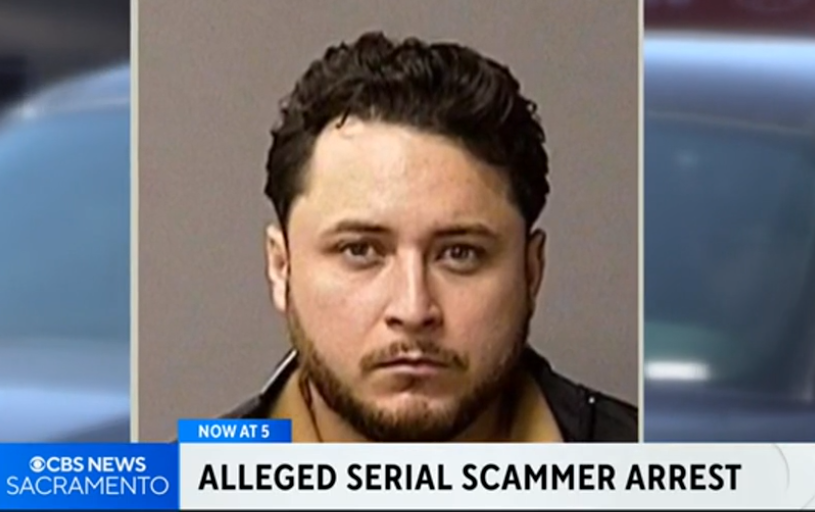
California Food Truck Scammer Arrested After Scamming 28 People out of Almost $1 Million USD

28-year-old Fernando Ochoa scammed over two dozen people after taking money from his victims and not providing any food trucks in return. Authorities investigated this case in Stanislaus County, California.

food truck
Fernando Ochoa; credit: CBS 13 News

CBS 13 News reported that 28-year-old Fernando Ochoa scammed over two dozen people after taking money from his victims and not providing any food trucks in return.

The scammer took money from several victims that thought they were buying food trucks from him. 

Authorities have totaled over $992,000 in money stolen, and it could go over a million after the investigation is over.

One couple, Adriana and Nika Nicaron gave Ochoa $20,000 in cash, and he never delivered anything to them. They own Kaji Teppenyaki, a food business and found 8A Food Trucks online, which was how the met Fernando Ochoa.

According to CBS 13 News, they paid him the 20,000 and he promised to have their food truck in two months, but it never came.

The theft of their money "almost destroyed their business."

On Thursday, April 18, Ochoa pled not guilty to 28 counts of fraud against him, with a bail increased to $500,000.

California Nurse Lost $1,000 to Zelle Scammer, but Wells Fargo Refunded Her About 4 Months Later

A nurse from California was tricked into sending $1000 to a scammer posing as a Wells Fargo representative. The scam involved a compromised bank account and a request to send money through Zelle to "fix" the error on her "hacked" account. 

Wells Fargo branch
Wells Fargo; credit: by Mike Mozart, CC BY DEED 2.0


TIME reported that 33-year-old Venessa Dikousman from Ceres, California was called by a man claiming to be from Wells Fargo to notify her that her bank account was being hacked. The man calling her cell phone was a scammer.

The number he called her from was the same as Wells Fargo's number, so it looked legitimate. The scammer was spoofing Wells Fargo to trick her into thinking he was a real employee.

Wells Fargo Scammer: 'You've Been Hacked. Send Money Using Zelle'

The man told her to fix the situation, she would need to "send $3,500 through Zelle to fix the breach."

Dikousman sent $1000 USD to the scammer and then realized that she was being scammed.

Dikousman reported the scam to Wells Fargo, and TIME reported that Wells Fargo "initially refused to refund the $1000 taken out of her account."

Financial institutions are not obligated to refund customers if they actually send their own money out to scammers, because this would not technically be "unauthorized."

It was about four months later that TIME contacted Wells Fargo to find out if they were going to refund her money. At that time, Wells Fargo decided to refund Dikousman the $1000.

Do You Think Wells Fargo Should Have Refunded Her Money Sooner?

Some people might wonder if Wells Fargo was going to refund her money if TIME had not contacted them.

What do you think? (Share your thoughts in the comments)

Colorado Woman Sees Error on Computer Telling Her the Computer was Hacked. She Calls Number and Loses $37K

A woman from Westminster is alerted by warning messages on her computer that "her IP address has been hacked." It tells her to call a number and she is greeted by a person claiming to be from "Microsoft headquarters," who conspires to steal $37K from her in an "imposter scam."

https://img.particlenews.com/image.php?url=031V0l_0rlwZ6jB00
photo credit: Microsoft logo (stock photo)Photo byMike Mozart; CC BY 2.0 DEED

According to the FTC data on the Consumer Sentinel Network, Americans lost more than $2.7 billion in "imposter scams" in 2023. These are scams where an unsuspecting person is duped by a scammer posing as an official or representative of a company.

A Colorado woman shared her recent experience with a scammer to try and warn others before it's too late.

Westminster Colorado Woman Believes 'Imposter Scammer'

KUSA 9News reported on Thursday that Diana Peltier from Westminster, Colorado received a troubling message on her computer, warning her that her "IP address had been hacked." The warning alert provided a phone number for her to call and looked very similar to the image on the screen below.

https://img.particlenews.com/image.php?url=0hp5lC_0rlwZ6jB00
photo credit: Windows messagePhoto byKUSA 9News

She trusted the information on the screen and called the phone number where she was greeted by a man claiming to be from Microsoft headquarters, who sounded "calm and assuring," who told her "they were going to take care of her. They are going to be certain that I'm going to be OK."

The scammer told her to click on a link, which downloaded remote software onto her computer, which allowed him to take "complete control" over her computer.

That's when he told Peltier that he could "see her accounts were being hacked." He then offered to connect her to her bank's fraud department.

Peltier Was Transferred to 'Bank Fraud Department'

Peltier was transferred to a woman named "Allison with US Bank" who was soft-spoken and calming her down, telling her to "breathe," while continuing to emphasize her accounts were hacked.

Peltier was then instructed to go to her bank and withdraw her money from her "hacked" bank account and to deposit it into a "safe place" and the safest nearby place to deposit her money was the nearest Bitcoin ATM at a liquor store.

That's where Peltier deposited the $37,000 she removed from her bank account, just as she had been coached to do by scammers.

https://img.particlenews.com/image.php?url=2RDdkB_0rlwZ6jB00
photo credit: Diana PeltierPhoto byKUSA 9News

She said:

"Within four hours, it was all over with. It was all gone." -Diane Peltier, Colorado scam victim

In hindsight she regrets it.

She said:

"I should have hung up with everybody. I should have unplugged the computer. I wasn't thinking right. I wasn't thinking right. I wasn't thinking clearly." -Diane Peltier, Colorado scam victim

Now, it is unlikely Peltier will ever see her money lost in this scam.

Always remember: Banks and officials will never ask for payment in gift cards or cryptocurrency.

Help protect friends and family by liking and sharing this article with others so they can be informed about this type of scam.

Sources

Federal Trade Commission: Consumer Sentinel Network.

Iacurci, Greg. "How to avoid the top scam of 2023: The internet has ‘really supercharged’ it, expert says." CNBC. 15 February 2024.

Staegar, Steve and Anna Hewson. "Colorado woman loses $37,000 in phantom hacker scam." KUSA 9News. 7 March 2024.


Scammer Leaves Her Fake ID at North Carolina Bank After Trying to Steal $4,000 from Bank Account

A woman in North Carolina went into a bank in Roanoke Rapids with a fake ID that had her real photo as the picture. The fraudster got nervous and quickly left while the bank teller was checking on the account she was trying to withdraw funds from.

Fraudster
credit: Roanoke Rapids Police Department
Some scammers never learn. 

NC Police Department is Looking for a Bank Scammer

Roanoke Rapids Police Department is actively looking for the woman seen in the photo above after she left a fake ID at a bank in Roanoke Rapids, NC.

She walked into the bank around noon on Feb. 7 at a location on East 10th Street in Roanoke Rapids.

She attempted to withdraw $4,000 from a bank account that was not hers.

The bank teller became suspicious and had another teller contact the real account owner. The account owner said that "no one should be removing funds from their account."

As the teller was checking on the bank account, the woman quickly left the bank branch, leaving her fake ID behind. Bank employees said that the picture on the Identification card was accurate, while the other information was not. 

If you have information on this woman, please contact Halifax County Crime Stoppers at 252-583-4444.


Nigerian Scammer Admits He Took $100K from Women Online with Romance Scams

A Nigerian scammer confessed that he took money from women online, divulging details about who he targeted so others can learn from his past romance scams.

Nigerian Scam
Nigerian scammer "Christopher Maxwell"; credit NBC4 Washington

The Federal Trade Commission (FTC) reported that romance scams totaled $1.3 billion in 2022.

Now the consulting firm Social Catfish consults with a past romance scammer from Nigeria.

Cofounder Brianna McClellan shares a big red flag.

She said:
“You met someone, and they're professing their love to you right away followed by someone asking you for money, gift cards, wire transfers, anything,” she said. “Anything that has to do with money being sent, red flag.”
Take the image of the person you are talking to, and put it into Google reverse image or on Social Catfish reverse image feature to see if you are talking to a catfish.

Nigerian Man Shares Details About His Past Romance Scams


A Nigerian man shares the details of his past romance scams on American women so now they can be careful when dealing with scammers online.

NBC4 Washington reported that a man who calls himself "Christopher Maxwell" is now divulging how he targeted women with romance scams to steal money.

Maxwell shared how he typically picked his victims.

He said:
“I usually pick my victims from the ages of 38 to, maybe, 60 to 65. Single women. I look for women that’re single that have kids, and they need someone to take care of them, to love them.”
He would often look for divorced women on dating platforms while using a picture of a military service member to portray himself as a trustworthy individual.

He said that sometimes his scam could yield money quickly, while other times it could take months. He would employ a "sob story" that he was deployed, and didn't have access to his bank account, and he needed help making a payment on a house, car, or for his kids. Of course, it was always a lie.

He said:
“Sometimes you have to be patient for months,” Maxwell said. “Sometimes I can get money in three days...Definitely, she would want to help me, because I’m her boyfriend.”
Maxwell even admits that he worked on and perfected his American accent so he could chat on the phone with his American victims.

He said:
“If you’re talking to someone online, a stranger that you don’t know, um, you can ask for a video call,” he advised. “If someone is refusing to talk to you on a video call for absolutely no reason, it’s a scam.” 
But Maxwell said he did feel guilty taking money from these women based on his lies.

He said:
“I felt so guilty,” he said. “I showed her my face on video call. She cried. She did not block me.”
He confessed what he did to his last victim after she got sick and went into debt. 

Nigerian Man Was Fined $250 and Spent One Day in Jail after Scamming $100,000 USD


Maxwell stole about $100,000 over five years and was arrested by authorities in Nigeria. He paid a $250 fine for his crime and spent one day in jail.

Colorado Man Loses Almost $140K to Scammer Posing as Chase Fraud Department

A Jefferson County man was living in a "nightmare" after a scammer posing as Chase Bank's Fraud Department sent a "Chase Fraud Alert" to his phone. After giving the scammer access to his account, 11 wire transfers initiated by the scammer stole almost $140K out of his Chase Business account.

Chase Bank branch
Chase Bank branch

What happens when the bank isn't prepared to help you resolve a fraud alert quickly, and a scammer posing as the fraud department is "more than eager" to help?

It's a situation happening far too often after a man in Colorado learned the hard way to be more cautious after losing almost $140K in a fraud scheme that all started with a text message.

An FBI report on fraud in 2022 found that 405 Colorado residents lost almost $500k to phishing scams, while 467 residents lost over $2 million to spoofing scams in the state.

More details are below.

Colorado Man Tricked by Scammer's Text Message Spoofing a 'Chase Fraud Alert'

FOX31 News reported on Friday that Scott Koll from Golden, Colorado received a Chase Fraud Alert text to his phone in January, which started a nightmare situation for him and his wife.

Scott is seen in the photo below along with the Chase Alert he received.

Chase Fraud Alert
Scott Zoll and Fraud text alert; credit: FOX31 News


The Chase fraud alert read: “Chase Alerts: Did you attempt to send a Wire transfer for the amount of $4,500.00? Reply Y or N. STOP to end."

Scott contacted his business partners to see if they knew anything about it.

He said:

“At that point, before I did anything else, I reached out to my business partners and asked if they had initiated a wire. They had not. So I then called the bank branch to see if they could see any activity on my account." -Scott Koll, Chase customer

Next, Scott called his local bank branch in Golden, which gave him the number for Chase's fraud department.

While communicating with his bank, he also replied to the "fraud alert" text.

He said:

“At that point, I acknowledged the text that came through, said, ‘No, we did not initiate this wire,’ [&] got a text back immediately saying somebody from the Chase fraud team will be in contact with you.” -Scott Koll, Chase customer

Scott didn't know that his text replied to a scammer waiting for his response.

Chase's legitimate fraud department number was being "spoofed" by the scammer, which also fooled Scott into thinking it was his real bank.

He said:

"Probably within 30 seconds, I received a phone call from the exact number that the branch had just given me." -Scott Koll, Chase customer

He was on the phone with a scammer and the call dropped. So he called the real Chase Bank fraud number. His real bank could not see the texts or communications that he had with the scammer, and Scott began to get frustrated with his real bank.

That's when the scammers posing as his bank called back. Since they seemed to know what they were doing, he continued on his call with them. They knew how much money was in his account and could tell him his bank account number.

The Scammer Asked Him for a 'One-Time Passcode'

Scott was working with who he thought was a member of the fraud team to look into a fraudulent wire that was posted to his account.

The scammer told him they would need Scott to reveal a one-time passcode that would be texted to his cell phone to authenticate his identity. Scott complied with this request, which then gave him the access needed to initiate 11 outgoing wire transfers out of his business account totaling $137,130.

Never give anyone a PIN or "one-time passcode" from your bank. Real employees of the bank do not ask for this and would get in trouble if they did ask for it. Only scammers ask for this type of information.

Chase Bank released a statement to FOX31 News.

It read:

"These types of scams are heartbreaking. Beware of new contacts asking you for codes, access to your device, or to send them, yourself, or anyone else money to prevent fraud. Chase, other banks, law enforcement, and technology companies won’t ask you to do this, but scammers will. Like cash, wires are final payments and are rarely successfully recalled, once sent." -Chase Bank

An Update to the Scott Koll Case

The U.S. Sun reported that Scott Koll was notified by Chase Bank on 31 January 2024 that a "significant amount" of their missing funds are expected to be returned after investigating his case over several weeks in January.

Their investigation also uncovered that Scott Koll's computer was infected with malware and "was hacked more than one year before the fraud took place."

Thoughts

Now it is time for the reader to share your thoughts on this story.

  • Do you know anyone who has been the victim of bank fraud?
  • Have you ever had fraudulent charges posted to your debit or credit card?
  • Have you had to contact a fraud department to dispute fraud charges?

Please share this article with friends and family so they can be informed about this story.

Sources

Chase Bank's website.

FBI Report: "Federal Bureau of Investigation Internet Crime Report 2022." Internet Crime Complaint Center (IC3). Date accessed: 2 February 2024.

Low, Rob. "Phishing scam dupes Jefferson County couple out of $137K." FOX31 News. 1 February 2024.

White, Debbie. "DON'T BANK ON IT. ‘Never trust an incoming call,’ Chase customers are warned after couple loses $137k – it looked like an official number." The U.S. Sun. 2 February 2024.

$6,800 Taken from California Woman's Wells Fargo Bank Account Days After Receiving Fraudulent Phone Call

 In August 2023, Nadwa Perket received a phone call claiming to be from Wells Fargo. Days later, $6,800 was taken from her bank account and sent to Florida.

Wells Fargo branch
Wells Fargo bank (stock photo) by Mike Mozart; CC BY 2.0 DEED

A woman in her 60s from San Diego lost $6,800 from her Wells Fargo bank account after being tricked by a scammer who pretended to be a Wells Fargo bank employee. Nadwa Perket said she felt betrayed by the bank, which refused to reimburse her money.

California Woman Receives Scam Call and Loses Money from Bank Account

The U.S. Sun reported that Nadwa Perket from San Diego received a phone call in August 2023 from a man who claimed to be from the Wells Fargo fraud team. He told her that someone had tried to wire money to an account in Florida and that he needed to add extra security layers to her bank account.

Perket said the caller sounded very professional and convincing. She did not give him her password or username, but she did provide him with some personal information and a one-time access code that he requested.

A few days later, she got a notification on her phone that her account balance was low. She checked her account and found out that $6,800 had been withdrawn from her account.

Perket contacted Wells Fargo and reported the fraud, but the bank told her that "she had authorized the transaction" and that they would not refund her money. She said she was "shocked and angry that the bank did not protect her as a client."

She said:

"It didn't look fishy to them." -Nadwa Perket

She said she then had to borrow money just to pay her rent and that she felt like the bank did not care about her. 

Questions for the Readers

Now it is time for the reader to share your thoughts in the comments.

  • Do you think that commercial banks care about their customers?
  • Do you think they will take care of customers that are victims of fraud?
  • Have you ever seen fraudulent charges on your debit or credit card?


Email Phishing from Bedroom

Email Phishing from Bedroom