Showing posts with label fraud. Show all posts

Former California News Anchor Loses More than $70,000 USD From her Robinhood Account in Scam

 A former Fresno news anchor loses $72,000 USD after a scammer tricks her into thinking her investment account was at risk after walking her through how to move her money out of her investment account.

news anchor
Former news anchor Alex Delgado; credit KSEE


Former Broadcaster Falls Victim to Growing Text Message Scam

Text message scams—often called "smishing" attacks—continue to evolve, and even experienced professionals are finding themselves targeted. A recent case involving a former Fresno television news anchor serves as another reminder that scammers are becoming increasingly convincing in their attempts to steal money and personal information.

According to reports, the former news anchor Alex Delgado lost $72,000 USD after receiving what appeared to be a legitimate text message connected to an investment account. What began as a seemingly routine security notification quickly turned into an elaborate social engineering scheme that convinced the victim to trust the criminals behind the messages.

Unfortunately, this type of fraud is becoming more common as cybercriminals impersonate banks, brokerage firms, government agencies, and major technology companies.

How the Scam Worked

Scammers increasingly rely on psychology instead of technology.

Rather than hacking accounts directly, they create a sense of urgency that pressures victims into making quick decisions before they have time to verify what is happening.

In this case, the victim reportedly received a text message that appeared to come from a trusted financial institution. Concerned that someone may have accessed the account, the victim followed the instructions provided and ultimately communicated with individuals pretending to represent customer support. Those conversations allegedly resulted in the transfer of a net total of $72,000 before the fraud was discovered.

Criminals often spoof phone numbers, create realistic-looking websites, and use language that closely resembles official communications from legitimate companies.

Why Smart People Still Get Scammed

One of the biggest misconceptions about scams is that only inexperienced internet users become victims.

The reality is much different.

Modern scammers spend significant time researching human behavior. They understand that fear, urgency, and trust are powerful emotional triggers. When someone believes their investments, retirement savings, or bank account are in immediate danger, they may act quickly without independently verifying the request.

Former journalists, financial professionals, business owners, retirees, and technology experts have all fallen victim to similar schemes.

Scammers don't necessarily target people who lack knowledge—they target moments of distraction, stress, or concern.

Warning Signs of a Text Message Scam

Consumers should be cautious if they receive a text message that:

  • Claims there is suspicious activity on an account.
  • Urges immediate action.
  • Includes a phone number to call instead of directing users to the company's official website.
  • Requests passwords, security codes, or authentication information.
  • Asks users to move money to a "safe" account.
  • Creates pressure by warning that accounts will be frozen or closed.

Legitimate financial institutions generally encourage customers to contact them using official phone numbers listed on their website or on the back of their debit or credit cards—not numbers provided in unexpected text messages.

How to Protect Yourself

The good news is that many text scams can be avoided by following a few simple security practices.

First, never click links or call phone numbers contained in unexpected text messages involving financial accounts.

Instead, open your banking or investment app directly or visit the company's website by typing the address into your browser yourself.

Second, verify any suspicious communication by calling the institution using the official customer service number.

Third, enable multi-factor authentication on every financial account whenever possible.

Finally, remember that legitimate companies will never ask customers to transfer money to protect it from fraud. If someone instructs you to move funds into another account for "security reasons," that is one of the strongest warning signs that you're dealing with a scammer.

The Bottom Line

The reported loss of $72,000 by a former television news anchor, Alex Delgado, demonstrates just how sophisticated today's text message scams have become. These criminals are no longer relying on poorly written emails filled with spelling mistakes. Instead, they use convincing messages, impersonate trusted companies, and exploit fear to manipulate victims into making costly decisions.

As financial fraud continues to evolve, the best defense remains slowing down before taking action. Verify every unexpected communication independently, never rely solely on information provided in a text message, and remember that a few extra minutes of caution could prevent the loss of thousands of dollars.

Florida Man used Multiple Schemes to Defraud Wholesale Produce Companies out of More $600,000 Worth of Onions and Potatoes

 A Florida man was arrested after stealing more over half a million dollars worth of produce, using schemes to defraud wholesale produce companies.

Florida man
Florida man steals over $600,000 worth of produce

A Florida man came up with "multiple schemes to defraud wholesale produce companies" by diverting produce to different destinations, stealing a lot of onions and potatoes.

Schemes to Defraud Wholesale Produce Companies

FOX 13 News reported that 39-year-old Jason Canals from Spring Hill, FL was arrested after being caught using a company's name and email signature block "without permission" to request produce from wholesale produce companies. Once a shipment was on its way, Canals would then divert the produce to a different destination. The wholesale produce suppliers were never paid in this scheme, and in another situation, Canals even produced false documents to deceive the wholesale produce companies into thinking the shipment was already paid for by their actual customer. 

After his crimes were tabulated, it was determined that the thefts totaled more than $600,000 USD, and the fraud case was investigated by the U.S. Department of Agriculture, the Office of Inspector General, and the F.B.I. The Assistant U.S. Attorney Merrilyn Hoenemeyer plans to prosecute Canals for his crimes, which could result in a maximum of 10 years in federal prison for eight counts of interstate transport of stolen property.


35 People Were Added to California Woman's Credit Card Without Her Knowledge or Permission

 A woman in the San Francisco Bay Area was surprised when she went on a cruise when "authorized users" were mysteriously added to her Chase credit card account out of nowhere. She learned this from the U.S. Postal Service when 35 credit cards appeared in her mail.'

San Francisco woman
credit: ABC7 News San Francisco

Bay Area Woman Was on a Cruise When 35 Credit Cards Arrived

Jodi Hayes of Walnut Creek, CA was traveling on a cruise with her husband in August 2024 when she was notified about mail from Chase. It turns out that 35 people were added to her Marriot Bonvoy Chase credit card account.

She said:

"I know I have good credit, but I've never seen anything like this ever. This fiasco ruined the end of our vacation." -Jodi Hayes

She contacted Chase about the issue, and she says their response was very "basic."

She says Chase claims it was due to a "computer glitch," and they offered to stop the cards from ever being activated.

Then the Chase fraud department contacted her to make a note on her account before giving her a new account number altogether.

She wanted them to tell her "We'll investigate it," but just proceeded to issue her a new account number and left it at that.

Sources:


California Food Truck Scammer Arrested After Scamming 28 People out of Almost $1 Million USD

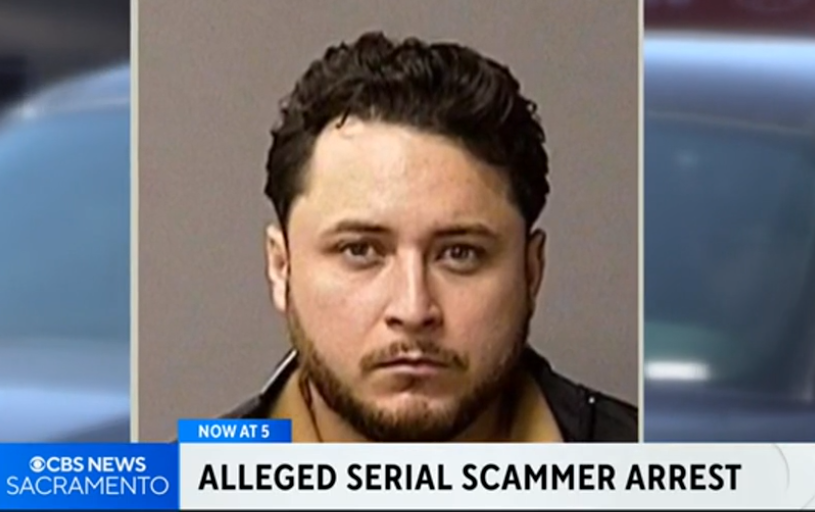
28-year-old Fernando Ochoa scammed over two dozen people after taking money from his victims and not providing any food trucks in return. Authorities investigated this case in Stanislaus County, California.

food truck
Fernando Ochoa; credit: CBS 13 News

CBS 13 News reported that 28-year-old Fernando Ochoa scammed over two dozen people after taking money from his victims and not providing any food trucks in return.

The scammer took money from several victims that thought they were buying food trucks from him. 

Authorities have totaled over $992,000 in money stolen, and it could go over a million after the investigation is over.

One couple, Adriana and Nika Nicaron gave Ochoa $20,000 in cash, and he never delivered anything to them. They own Kaji Teppenyaki, a food business and found 8A Food Trucks online, which was how the met Fernando Ochoa.

According to CBS 13 News, they paid him the 20,000 and he promised to have their food truck in two months, but it never came.

The theft of their money "almost destroyed their business."

On Thursday, April 18, Ochoa pled not guilty to 28 counts of fraud against him, with a bail increased to $500,000.

Colorado Man Loses Almost $140K to Scammer Posing as Chase Fraud Department

A Jefferson County man was living in a "nightmare" after a scammer posing as Chase Bank's Fraud Department sent a "Chase Fraud Alert" to his phone. After giving the scammer access to his account, 11 wire transfers initiated by the scammer stole almost $140K out of his Chase Business account.

Chase Bank branch
Chase Bank branch

What happens when the bank isn't prepared to help you resolve a fraud alert quickly, and a scammer posing as the fraud department is "more than eager" to help?

It's a situation happening far too often after a man in Colorado learned the hard way to be more cautious after losing almost $140K in a fraud scheme that all started with a text message.

An FBI report on fraud in 2022 found that 405 Colorado residents lost almost $500k to phishing scams, while 467 residents lost over $2 million to spoofing scams in the state.

More details are below.

Colorado Man Tricked by Scammer's Text Message Spoofing a 'Chase Fraud Alert'

FOX31 News reported on Friday that Scott Koll from Golden, Colorado received a Chase Fraud Alert text to his phone in January, which started a nightmare situation for him and his wife.

Scott is seen in the photo below along with the Chase Alert he received.

Chase Fraud Alert
Scott Zoll and Fraud text alert; credit: FOX31 News


The Chase fraud alert read: “Chase Alerts: Did you attempt to send a Wire transfer for the amount of $4,500.00? Reply Y or N. STOP to end."

Scott contacted his business partners to see if they knew anything about it.

He said:

“At that point, before I did anything else, I reached out to my business partners and asked if they had initiated a wire. They had not. So I then called the bank branch to see if they could see any activity on my account." -Scott Koll, Chase customer

Next, Scott called his local bank branch in Golden, which gave him the number for Chase's fraud department.

While communicating with his bank, he also replied to the "fraud alert" text.

He said:

“At that point, I acknowledged the text that came through, said, ‘No, we did not initiate this wire,’ [&] got a text back immediately saying somebody from the Chase fraud team will be in contact with you.” -Scott Koll, Chase customer

Scott didn't know that his text replied to a scammer waiting for his response.

Chase's legitimate fraud department number was being "spoofed" by the scammer, which also fooled Scott into thinking it was his real bank.

He said:

"Probably within 30 seconds, I received a phone call from the exact number that the branch had just given me." -Scott Koll, Chase customer

He was on the phone with a scammer and the call dropped. So he called the real Chase Bank fraud number. His real bank could not see the texts or communications that he had with the scammer, and Scott began to get frustrated with his real bank.

That's when the scammers posing as his bank called back. Since they seemed to know what they were doing, he continued on his call with them. They knew how much money was in his account and could tell him his bank account number.

The Scammer Asked Him for a 'One-Time Passcode'

Scott was working with who he thought was a member of the fraud team to look into a fraudulent wire that was posted to his account.

The scammer told him they would need Scott to reveal a one-time passcode that would be texted to his cell phone to authenticate his identity. Scott complied with this request, which then gave him the access needed to initiate 11 outgoing wire transfers out of his business account totaling $137,130.

Never give anyone a PIN or "one-time passcode" from your bank. Real employees of the bank do not ask for this and would get in trouble if they did ask for it. Only scammers ask for this type of information.

Chase Bank released a statement to FOX31 News.

It read:

"These types of scams are heartbreaking. Beware of new contacts asking you for codes, access to your device, or to send them, yourself, or anyone else money to prevent fraud. Chase, other banks, law enforcement, and technology companies won’t ask you to do this, but scammers will. Like cash, wires are final payments and are rarely successfully recalled, once sent." -Chase Bank

An Update to the Scott Koll Case

The U.S. Sun reported that Scott Koll was notified by Chase Bank on 31 January 2024 that a "significant amount" of their missing funds are expected to be returned after investigating his case over several weeks in January.

Their investigation also uncovered that Scott Koll's computer was infected with malware and "was hacked more than one year before the fraud took place."

Thoughts

Now it is time for the reader to share your thoughts on this story.

  • Do you know anyone who has been the victim of bank fraud?
  • Have you ever had fraudulent charges posted to your debit or credit card?
  • Have you had to contact a fraud department to dispute fraud charges?

Please share this article with friends and family so they can be informed about this story.

Sources

Chase Bank's website.

FBI Report: "Federal Bureau of Investigation Internet Crime Report 2022." Internet Crime Complaint Center (IC3). Date accessed: 2 February 2024.

Low, Rob. "Phishing scam dupes Jefferson County couple out of $137K." FOX31 News. 1 February 2024.

White, Debbie. "DON'T BANK ON IT. ‘Never trust an incoming call,’ Chase customers are warned after couple loses $137k – it looked like an official number." The U.S. Sun. 2 February 2024.

$6,800 Taken from California Woman's Wells Fargo Bank Account Days After Receiving Fraudulent Phone Call

 In August 2023, Nadwa Perket received a phone call claiming to be from Wells Fargo. Days later, $6,800 was taken from her bank account and sent to Florida.

Wells Fargo branch
Wells Fargo bank (stock photo) by Mike Mozart; CC BY 2.0 DEED

A woman in her 60s from San Diego lost $6,800 from her Wells Fargo bank account after being tricked by a scammer who pretended to be a Wells Fargo bank employee. Nadwa Perket said she felt betrayed by the bank, which refused to reimburse her money.

California Woman Receives Scam Call and Loses Money from Bank Account

The U.S. Sun reported that Nadwa Perket from San Diego received a phone call in August 2023 from a man who claimed to be from the Wells Fargo fraud team. He told her that someone had tried to wire money to an account in Florida and that he needed to add extra security layers to her bank account.

Perket said the caller sounded very professional and convincing. She did not give him her password or username, but she did provide him with some personal information and a one-time access code that he requested.

A few days later, she got a notification on her phone that her account balance was low. She checked her account and found out that $6,800 had been withdrawn from her account.

Perket contacted Wells Fargo and reported the fraud, but the bank told her that "she had authorized the transaction" and that they would not refund her money. She said she was "shocked and angry that the bank did not protect her as a client."

She said:

"It didn't look fishy to them." -Nadwa Perket

She said she then had to borrow money just to pay her rent and that she felt like the bank did not care about her. 

Questions for the Readers

Now it is time for the reader to share your thoughts in the comments.

  • Do you think that commercial banks care about their customers?
  • Do you think they will take care of customers that are victims of fraud?
  • Have you ever seen fraudulent charges on your debit or credit card?


Chase Bank Won't Accept $5K Check Mobile Deposited by Georgia Woman. They Close Her Account, Claiming it is Fraud

A Georgia woman is upset after she claims she is being unfairly treated like a "criminal" after trying to mobile deposit a U.S. government refund check for $5,298 into her Chase bank account. The bank flagged the check for fraud and froze her bank account, eventually closing it.

Chase bank
Chase bank sign; by Mike Mozart, CC BY 2.0 DEED

Channel 2 News reported that Lois White from Atlanta is in shock after trying to deposit a check using mobile deposit into her Chase bank account.

She said:

"I feel like a criminal, like I've done something wrong... Apparently, they couldn't verify this check was real." -Lois White, Chase customer

US Government Forgave Lois White's Student Debt

Lois White received a letter in the mail from the U.S. Government forgiving her student debt.

The letter said, "Congratulations -- your student loan has been forgiven."

White was grateful that her debt was forgiven but had no idea that Chase Bank would flag the check as fraud.

Channel 2 News reported that Chase put a "fraud hold" on the check, and closed Lois White's bank account. The bank would not allow her access to her money.

Lois went down to the bank and took her letter. 

She said:

"I went to the branch. I gave them this letter. I gave them this check, gave them my ID, my birth certificate, [my] social security card." -Lois White, Chase customer

 Then Channel 2 News contacted Chase Bank. That's when the bank said they were "researching her case."

As of 8 December 2023, Chase Bank was still holding White's money.

She said:

"I'm devastated because I've always been able to pay my bills on time and handle my business. But I'm like couch surfing now." -Lois White, Chase customer

Texas Man Loses $49K in a Banking Scam. His Account was at Chase Bank

A Texas man received a call from a person claiming to be from Chase Bank and informing him that his account had been compromised and the only way to protect his funds was to transfer them to a "safe" account to protect his money.

Chase Bank
Chase bank (stock image)

Texas Man Fell For a Scam Losing $49K at Chase Bank

CBS19 News reported that in December 2022, a Texas man named Angel Pineda received a fraudulent phone call, but said they were calling from Chase Bank, and that his bank amount with $49,000 had been compromised.

Angel
Angel Pineda; credit: CBS19 News

After the individual informed him that his account had been compromised and that he urgently needed to transfer his funds to a "safe" account in order to protect them. This is not standard operating procedure for a bank. That's because he was on the phone with a scammer.

The phone call didn't surprise Angel because he was used to getting fraud alerts from his bank, like when he made his regular car payment. 

He said:

"They were just like your account is not safe, it's compromised," said Pineda. "So we need to make sure your money’s secure and move it to a new account." -Angel Pineda, Chase customer

Feeling nervous and confused, Angel followed the instructions of the caller and transferred the funds to the account provided. It was only later that she realized she had fallen victim to a scam and that he had lost most of his savings because he trusted the scammer.

The scammer even asked for personal information over the phone to create a new Chase Bank account and he complied. 

"So there wasn't any reason for me to suspect anything," said Pineda. "Then I got the notification for fraudulent activity for a small amount and I was like no it's not me." -Angel Pineda, Chase customer

Angel says he finally got a call back from a legitimate Chase Bank associate who plans to review his case and call him up with an update. 

It is important to always monitor your bank account and statements for fraud activity. If possible, use two-factor authentication to log into financial accounts.


Atlanta Man Claims That $14K Was Stolen from His Account, Paid to Mercedez Benz. Wells Fargo Denies Claim & Won't Issue a Refund

What happens when there is a fraud purchase on your account and a large sum of money leaves your bank account and when you dispute it the bank says it was authorized? 

This happened to a Georgia family banking with Wells Fargo. 

Mercedes-Benz
Mercedes-Benz car; credit: Jakob Rosen on Unsplash

According to the U.S. Federal Trade Commission (FTC), Georgia was ranked as "the worst state for fraud" in Q3 2023. 

WSB-TV Channel 2 reported that Ken Pischke filed a dispute with Wells Fargo after $14K was paid to a Mercedez Benz Financial Services account, claiming his family didn't authorize payments to Mercedes Benz and they don't own a Mercedes Benz.

Wells Fargo Denies Fraud Claim and Closes Bank Account

Wells Fargo contends that there were three transfers from Pischke’s bill pay to someone’s Mercedes Benz Financial Services account. They have denied his claim of fraud, and have closed his accounts.

Wells Fargo wrote in a denial letter to Pischke:

“It was determined the transactions were authorized by you or someone you authorized. We have closed your claim.” -Wells Fargo

As a result, Pischke filed a police report, provided paperwork to Wells Fargo, and contacted Mercedes Benz to no avail. Wells Fargo is not convinced that these were fraudulent transactions. They believe that Pischke's wife is guilty of authorizing these transactions.

Pischke has lost almost $14,000 due to fraud and it's not a small amount of money to him.

It was a total of about almost $14,000. We were shocked, absolutely shocked. So, they closed down all the accounts...I mean, it’s a large sum of money, I think to anybody, it is to me.  They just blow it off like there’s no big deal.” -Ken Pischke

Wells Fargo holds their position and will not budge on the matter.

Pischke said:

“They said, ‘That doesn’t make any difference. It’s still your wife is the one that actually did the transactions.’ Now, I’ve been married for 42 years. I would know if my wife would do something like that. And she doesn’t have a Mercedes in the garage either or anywhere else.” -Ken Pischke

Wells Fargo gave the following statement to WSB-TV Channel 2 News in response to their inquiry on the matter.

“While we can’t discuss the specifics of this customer’s situation for privacy and confidentiality reasons, we can confirm that we thoroughly researched the matter, and the evidence supports our decision.” -Wells Fargo

Questions for the Reader

Do you think it is unfair that Wells Fargo will not issue a refund?

Do you think that Ken Pischke's wife paid Mercedes Benz Financial Services without telling her husband?

Ken Pischke has lost almost $14,000 and says their family doesn't have a Mercedes Benz. He believes it is a case of bank account fraud. Wells Fargo will not issue a refund.

Michigan Woman Gave Over $300k to a Scammer Involving Amazon's Fraud Department

A Michigan woman gave over $300k to a scammer claiming to be from Amazon's Fraud Department. Two months after the scam started, she finally told her husband and now they may never recover her money.

woman
Photo by Giorgio Trovato on Unsplash


A woman from Troy, Michigan handed over $300,000 to a scammer, and in the "blink of an eye," it was gone before realizing her grave mistake. Then she had to tell her husband what she did.

Michigan Woman Gave the Scammer $300,000

FOX 2 News reported about a woman from Troy, Michigan who fell for a common scam from someone claiming to be from Amazon's fraud department.

First, she was contacted by a scammer in June 2023, claiming to be an Amazon employee, working for their fraud department, and he accused her of drug trafficking.

This should have been the first red flag, as Amazon would logically never be involved with something like this.

The scammer encouraged the woman to contact the Social Security Administration, because "she may be a victim of fraud."

A second scammer contacted her, claiming she was under investigation for "drug trafficking and fraud."

Next, the scammer told her not to contact anyone about her case. This is common in scams involving the transfer of money, and oftentimes the scammer will say there is a "gag order" preventing the victim from telling anyone. This is all part of the scam.

The scammer told her that he "could protect her from legal action" if she sent him "any money she had over $5,000." The scammers talked her through buying pre-paid gift cards and she sent photos of the gift card numbers.

The scammer asked for an accounting of her financial assets and for her driver's license, and she provided a photo.

When the scammer found out she had over $300k in gold and silver, the scammer told her how to turn these assets over to them, to "protect them from seizure."

The communication from the scammers ended on 28 August 2023. The phone number she had been communicating with had been disconnected. This is when she realized she had been scammed and then decided to tell her husband.

They went to the authorities to report the scam, but the damage had been done and their money was gone.

How to Prevent Scams

In modern times, it is important to know how to prevent being scammed.

YouMail - a company that monitors robocalls - reported in 2021 that "Americans receive between 100 to 150 million robocalls per month claiming to be with Amazon." (Source: Cincinnati Enquirer)

Tips to Prevent Getting Scammed:

  • First, if you are ever accused of a crime, you need to tell your family and quickly get a lawyer involved. If she had told her family and a lawyer, she probably would have found out about the scam.
  • Next, if a person from Amazon calls you, it is probably a scam. Amazon rarely calls a person unless you have first requested them to call you (such as you are trying to get in touch with customer service). They may offer to call you back so you don't have to wait on hold or if you prompt them to call you on their website. Amazon will not call a customer "out of the blue" without being first directed to. If you receive a random phone call from Amazon, find a reason to end that call and then call Amazon Customer Service back directly and inquire if they need to contact you.
  • Never give out personal information, such as copies of your driver's license and personal financial information to someone who asks you. Again, if you have a lawyer involved, give this information only to your trusted legal representative.
  • Lastly, no government agency, nor law enforcement would ever ask you for payment at the beginning or during an open investigation.
  • Ask the family to take a look at any emails or texts from Amazon that seem out of the ordinary. Never click on links in texts or emails unless you trust it is legitimate.

Amazon states on its website: "We take fraud, scam, phishing and spoofing attempts seriously. If you receive correspondence you think may not be from Amazon, please report it immediately."

If you have received a "suspicious" phone call, email, or SMS/text message, this can be reported to Amazon on this webpage.

Thoughts

Questions for the reader:

  • Have you ever been contacted in an email or by phone by someone claiming to be from Amazon? What did you do?
  • Do you know anyone who has been scammed?

The purpose of this article is to keep you and your loved ones protected from ongoing scams.

Please share this article with family and friends so they can stay up-to-date on the latest scams.

Sources

Amazon "Report Something Suspicious" webpage. Date accessed: 9 September 2023.

Brookbank, Sarah. "Got a call from Amazon about fraud on your account? It could be a scam. Here's how to tell." Cincinnati Enquirer. 28 May 2021.

FOX 2 Staff. "Amazon scam: Troy woman scammed out of $300K in 2 months." FOX 2 News. 6 September 2023.

Email Phishing from Bedroom

Email Phishing from Bedroom